



Promoting native Alpine wool and building new sustainable supply chains around this resource: this is the key objective of the European Interreg Alpine Space Woolshed project, which brought together universities, local authorities, research centers, breeders, and businesses. Tollegno 1900 is also involved. “We approached Tollegno 1900 because, for this project, we were looking for a partner who not only understood the characteristics of native wools but also could help us pair these rustic materials with innovative, soft, and visually striking yarns,” explains Edoardo Brunello, a designer and research fellow at the Iuav University of Venice, and a professor at the Fashion Design Laboratory 2 in the second year of the Bachelor’s Degree in Fashion Design and Multimedia Arts and and directly involved in the project whose scientific advisor is Professor Gabriele Monti.
What were the starting points for the Interreg Alpine Space Woolshed project, in which you are directly involved?
It all began with a reflection on a simple question: how can we restore value to a local raw material often considered marginal? The Woolshed project was born precisely to address this challenge, promoting new connections between farming, textile processing, and design. In our case, we chose to work with the native wool of the Brogna and Alpagota sheep, two resources closely linked to the Veneto Alpine regions and endowed with a strong cultural and environmental identity, yet currently only marginally used in the fashion industry.
The project’s goal went beyond the creation of a mere product…
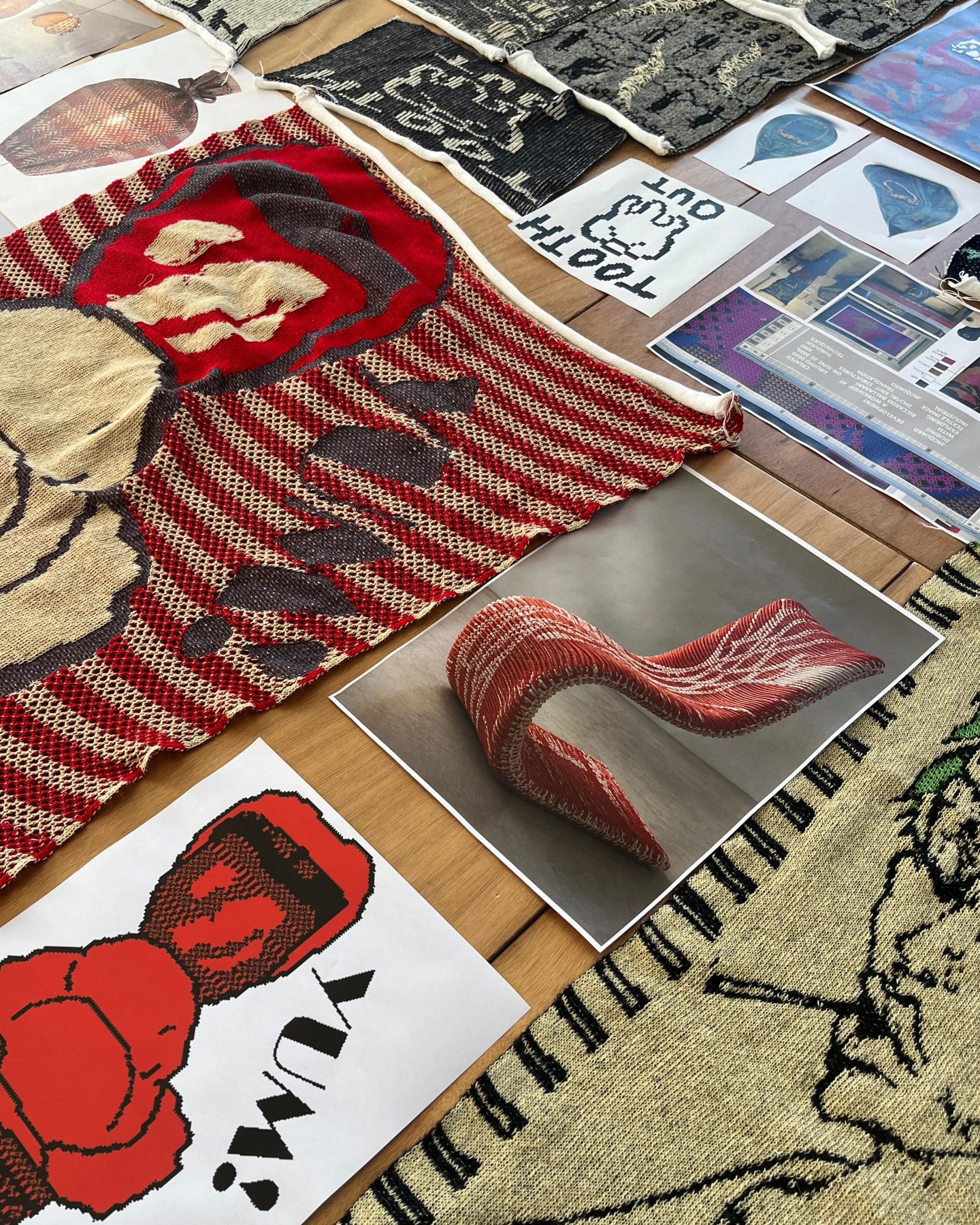
Exactly. Our aim, beyond the product itself, was to experiment with new design possibilities. For this reason, we brought together local materials, industrial expertise, and contemporary tools such as digital knitwear design and production.
How did the project come about?
The project took shape during a Design Marathon, an intensive collaborative design workshop promoted by Woolshed that brings together designers, researchers, technicians, companies, and local stakeholders around a specific design challenge. Design Marathons aren’t simple workshops, but true research and experimentation tools in which different skills are brought together to generate new scenarios and prototypes.
How was it developed specifically?
A selection of students from the three-year degree program in Fashion Design and Multimedia Arts at the Iuav University of Venice, led by Riccardo Ballarani of Studio Groppo, developed a series of digital knitwear samples and prototypes combining Brogna and Alpagota wools with patterned and colored yarns supplied by Tollegno 1900. One of the most interesting aspects of the project was the dialogue between the natural colors of the native wools, ranging from milky white to beige and natural gray, and the sophisticated color research of Tollegno 1900. The company’s yarns allowed them to introduce contemporary color accents that enhance the visual qualities of the Alpine wools without obscuring their origins. At the same time, the comparison of different materials also highlighted the tactile qualities of the fibers: the more rustic and authentic texture of native wools combined with the softness and pleasant feel of Tollegno 1900 yarns, creating rich, balanced, and innovative textile surfaces.
What are the next steps?
In the short term, we want to deepen the technical and design experimentation initiated during the Design Marathon, further developing the prototypes and verifying their potential applications.
And looking to the more distant future?
In the medium term, the goal is to contribute to the construction of new value chains for native Alpine wool, demonstrating that these fibers can find a place in contemporary, high-quality production. We are also interested in continuing to build connections between the world of research, businesses, breeders, and designers, so that the knowledge present in the regions can be transformed into concrete development opportunities.
Why did you decide to involve Tollegno 1900 in this project?
Tollegno 1900 represents an excellent example of how manufacturing tradition and innovation can coexist. Beyond the technical quality of the yarns, we were particularly interested in the company’s ability to work on color, handfeel, and the construction of yarns with a strong aesthetic personality. But that’s not all. Tollegno’s involvement allowed for a virtuous dialogue between two seemingly distant worlds: on the one hand, native Alpine wools, bearers of territorial, environmental, and cultural values; on the other, an industrial enterprise capable of transforming the material into sophisticated, contemporary products. The combination of these elements has generated results that neither material could have achieved alone.
Are there any upgrades to the project you’re working on?
We’re working to expand the applications of native Alpine wool not only in fashion design but also, together with Serienumerica of Turin, in the design of interior furnishings. At the same time, we are considering ways to make the history of the materials and the people involved in the supply chain more visible, highlighting aspects such as traceability, sustainability, and the connection to the local area. One of Woolshed’s goals is not only to produce new objects, but to contribute to the construction of new narratives around Alpine wool, demonstrating how a resource often perceived as marginal can become a driver of cultural, social, and economic innovation.