



By Barbara Perchinella at KIP studio in collaboration with Stefano Gelosini
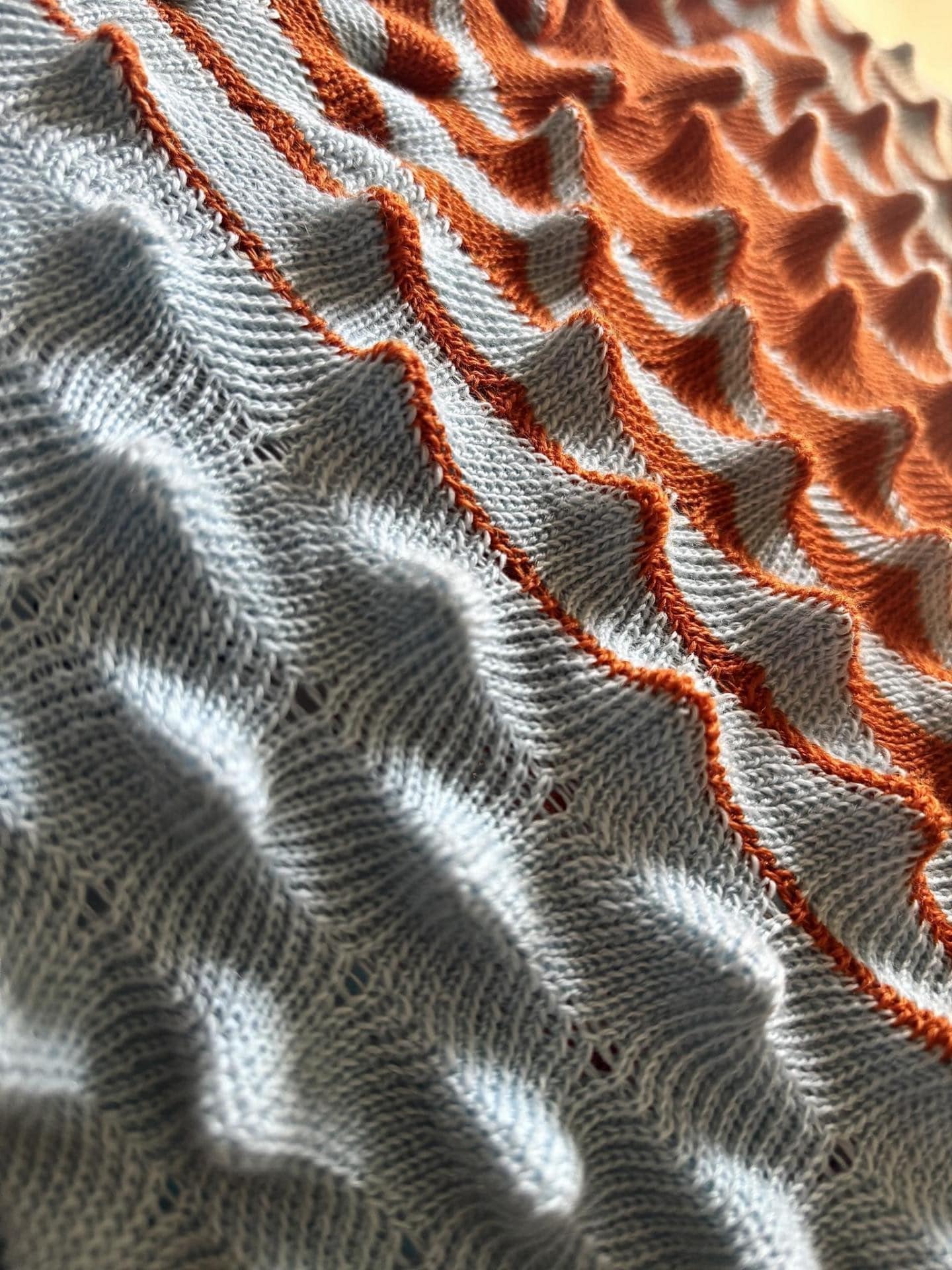
To create a high-quality knitwear product, there are some basic requirements regarding yarn selection and attention to seasonality.
The choice of yarn is the first technical decision in a knitwear project and influences every subsequent phase. A combed yarn like Extra Fine Merino wool, for example, guarantees a clean, linear, silky look, making it the natural choice for classic and elegant garments.
Moreover, technical expertise combined with creativity can incorporate a clean, linear yarn into a more “fashionable” project, combining the yarn’s technical and mechanical characteristics with the choice of a more complex stitch structure, such as an alternating offset stitch that creates three-dimensionality or a jacquard with a mix of different stitches that follow a graphic and give the fabric a more sporty look.
Carded yarn, on the other hand, responds to a different aesthetic: volume, softness, a full hand, and lightness. The third register is that of bouclé, with its core structure and characteristic undulations, which, however, require careful mechanical management. This attention concerns, in particular, the adjustment of the machine to avoid breaking the nylon core—or continuous filament—and, consequently, losing the yarn’s three-dimensional effect.
Seasonality also further guides the selection: therefore, space is given to all-season yarns in medium-light counts (14, 16, 18, and 21) for balanced products, and to heavier counts (12, 7, 5, and 3) for winter.
Never underestimate the ratio of count/gauge/stitch.
The critical triangle of knitwear is composed of machine gauge, yarn count, and selected stitch.
Altering one of the three elements without recalibrating the others produces instability. For example, knitting with a thinner (lower) yarn stresses the yarn during processing, mechanically stressing the fiber, and risking fraying. Using a thicker (higher) yarn, however, forces the needle to unload the stitch with difficulty, generating continuous friction in the needle bed and increasing breakages.
The yarn width suggested by the spinning mill undoubtedly represents a fundamental technical reference. It is the starting point for actual adjustments on the machine, which, in turn, depends primarily on the selected knit stitch. It’s important to remember that knitting with transport stitches, intarsia, or compact gradations requires higher tension: on delicate yarns, especially bouclé, this can result in defects in the fabric or unmanageable thread breaks, which create very high waste rates during production.
Yarn/Process Compatibility: Critical Cases
Before undertaking any knitwear project, it’s helpful to remember that yarns are not suitable for all knit stitches. Bouclé yarns, for example, are not suitable for work with inlays or complex textured stitches: their structure cannot withstand the required mechanical stress, and the risk of damaging the core of the yarn is real. Very hairy yarns, such as some carded yarns, on the other hand, amplify the extraction of the hair in the areas most stressed by the knit stitch. Therefore, the choice of yarn is never separable from the choice of garment construction.