

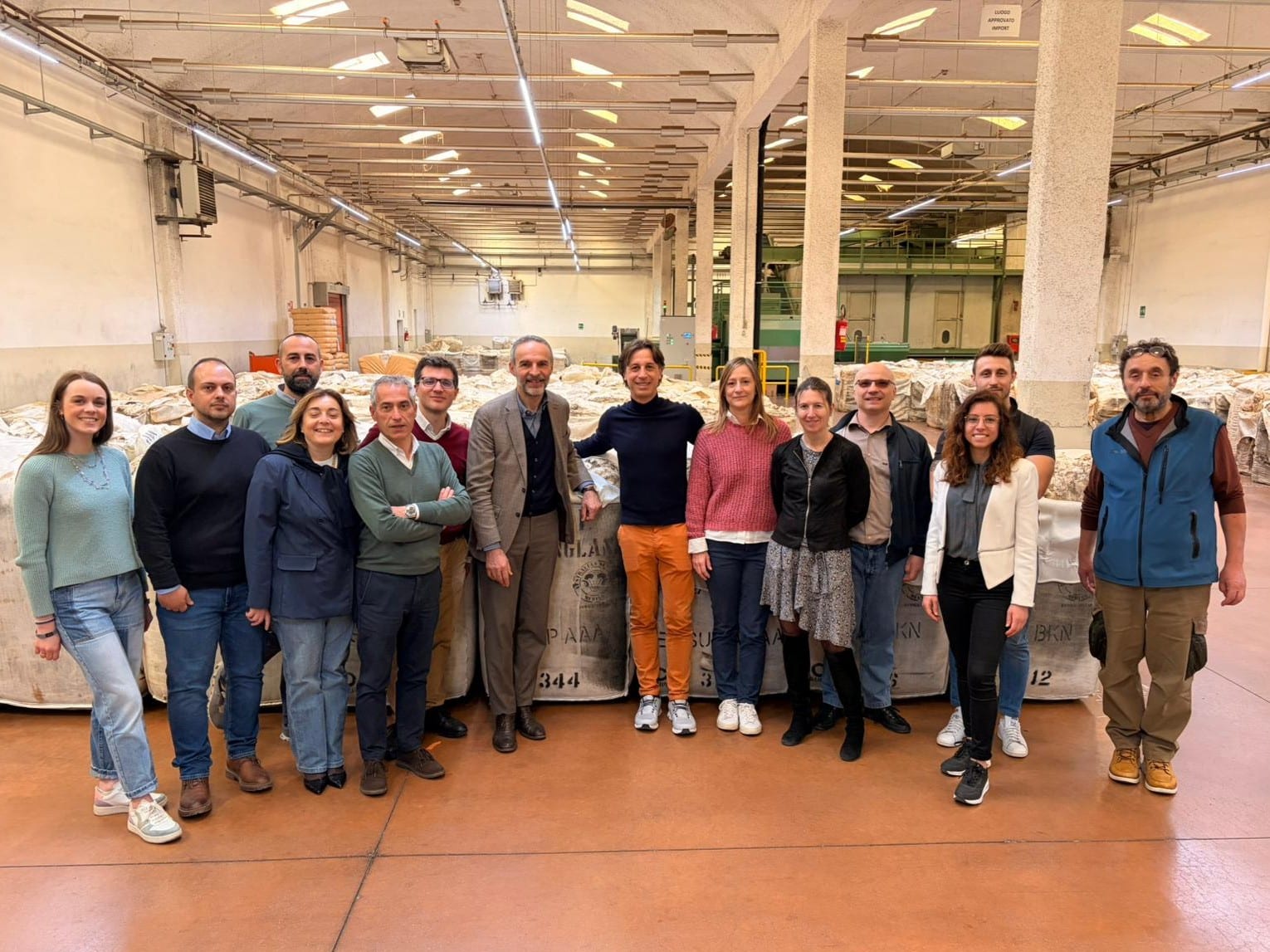
It is among the companies that have participated in the training program promoted by Tollegno 1900, “Biodiversity and Ecosystem Services in the Textile Supply Chain,” demonstrating its awareness of sustainability and the expertise gained in implementing concrete actions to protect the environment and improve the performance of its resources. Pettinatura di Verrone, in addition to being one of the stages of the on-site training program, represents one of the Biella region’s recognized historic excellences. Founded in 1960 as a wool processing plant, Pettinatura has specialized in superfine wools over the years and, in the 1990s, expanded its processing to include cashmere and other fine fibers such as vicuña, mohair, alpaca, and guanaco. Acquired in 1989 by the Schneider Group, which combines production and trading, in 2012 it saw the entry of three Italian giants—Loro Piana, Marzotto, and Ermenegildo Zegna—into its shareholding structure, with the aim of enhancing and preserving the expertise of the Biella district. Finally, in 2025, it underwent another significant strategic move with the Modiano Group’s acquisition of the Schneider Group’s wool operations—including a majority stake in Pettinatura di Verrone—consolidating a leading European wool processing hub. “Pettinatura Di Verrone’s willingness to host the working group that participated in our initiative,” explains Fabio Quaregna, Compliance Manager at Filatura di Tollegno 1900, “was not only an act of generosity, but also an important moment of sharing. Through the company tour, we were able to identify strong commonalities with Filatura di Tollegno 1900, starting with their sustainable vision.” This is confirmed by Michela Toppan, Quality Assurance & Sustainability Coordinator at Pettinatura di Verrone. “For Pettinatura di Verrone,” she explains, “sustainability is a moral and strategic commitment that concerns the environment, people, and the supply chain. This means managing every phase of the process with consistency, operational intelligence, and respect for resources, avoiding waste and maximizing the value of what nature offers us. It’s not just an environmental choice, but a management approach that guides every decision and every investment. A logical sustainability.”
Mrs Toppan, how does this vision translate into operational terms?
Through a series of concrete actions ranging from the implementation of an Integrated Management System for environmental and safety issues to the internal purification of wash water, from the extraction of wool grease for the cosmetics and pharmaceutical sectors to the reuse of purified sludge in agriculture.
Energy efficiency is also a significant factor in this systemic vision…
There’s no doubt about it. This is why at Pettinatura di Verrone we can count on a cogeneration plant that produces electricity and heat while reducing consumption and emissions. We also plan to install a photovoltaic system by the end of 2026.
Your “sustainable strategy” also includes waste reduction and responsible fiber management….
We are aware that working with rare and precious materials requires treating them with care and taking steps to minimize waste.
A continuous commitment that will go hand in hand with other sustainable initiatives in the medium to long term?
Based on ongoing actions, natural developments could include further improvements in both energy efficiency, with investments in lower-impact technologies, and purification systems and continuous recovery of by-products. This overview could also include progressive emission reduction paths.
Your approach to sustainability was explained to participants in “Biodiversity and Ecosystem Services in the Textile Supply Chain”: what was your assessment of the initiative?
Environmental sustainability, biodiversity protection, and reducing the impact of ecosystems are now central themes, recognized by institutions as well.
Our participation provided an opportunity to raise awareness among other supply chain stakeholders of the impact of the initial processing of fibers on ecosystems. The initiative fostered discussion with other supply chain stakeholders, helping to strengthen the path toward more responsible management along the entire supply chain.